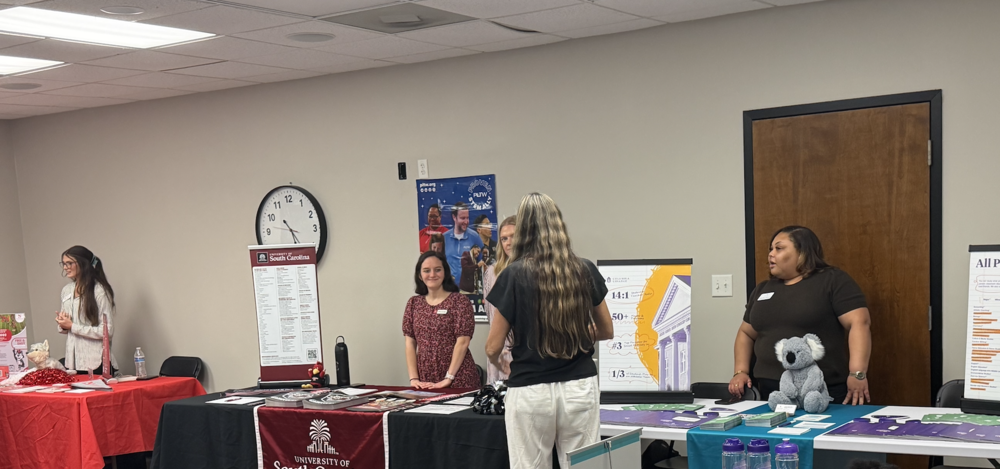
COLUMBIA, S.C. – What does the road after high school look like? SC Whitmore students and their families had the opportunity to start finding answers at the school’s recent Literacy, College & Career Night, where college representatives, career professionals, and community resources came together under one roof.
Held on October 1st, 2026, the event hosted seven colleges and universities: USC Columbia, USC Union, Newberry College, Columbia College, Benedict College, Piedmont Technical College, and Midlands Technical College. Representatives were available to answer questions, share information, and help students and families better understand their options for life after graduation.
The evening also introduced students to another possible career path. Representatives from the Columbia Police Department spoke with families about careers in law enforcement and offered insight into what working in the field can look like.
“We want our students to see that there are many different paths they can take after high school, and sometimes the best way to understand those paths is to have a conversation with someone who has walked them,” said Kim Dunbar, Executive Director of SC Whitmore School. “Bringing colleges and career professionals directly to our students gives them the opportunity to ask questions, explore their interests and start thinking about what their own next chapter could look like.”
Literacy was woven throughout the evening as well, with students receiving free books to take home. Families also enjoyed dinner together and had the opportunity to connect with SC Whitmore staff and one another, while students received SC Whitmore swag and other giveaways.
The event reflects SC Whitmore’s broader commitment to helping students prepare for the opportunities that come after high school – whether that means college, technical education, a career or another path.
For students, it was an opportunity to move some of those big “what do I do after high school?” questions from the abstract to the real – by asking college representatives directly, hearing directly from working professionals, and discovering opportunities they may not have considered before.
“Our goal is to make those possibilities feel real and accessible to our students,” said Dunbar, “When students can meet the people, ask the questions, and see the opportunities for themselves, it can change the way they think about their future.”